Introduction to Gel Electrophoresis System
A gel electrophoresis system is a fundamental laboratory technique used to separate DNA, RNA, and proteins based on their size and electrical charge. It is widely used in molecular biology, genetics, and biotechnology.
This method works by applying an electric field to move charged molecules through a gel matrix, allowing scientists to analyze and compare biomolecules efficiently.
Principle of Gel Electrophoresis
The principle of gel electrophoresis is based on the movement of charged particles in an electric field.
- DNA and RNA are negatively charged → move toward the positive electrode (anode)
- Proteins can be positively or negatively charged depending on pH
- Smaller molecules move faster through the gel
- Larger molecules move slower due to resistance
This allows separation based on size and charge.
Gel Electrophoresis Apparatus
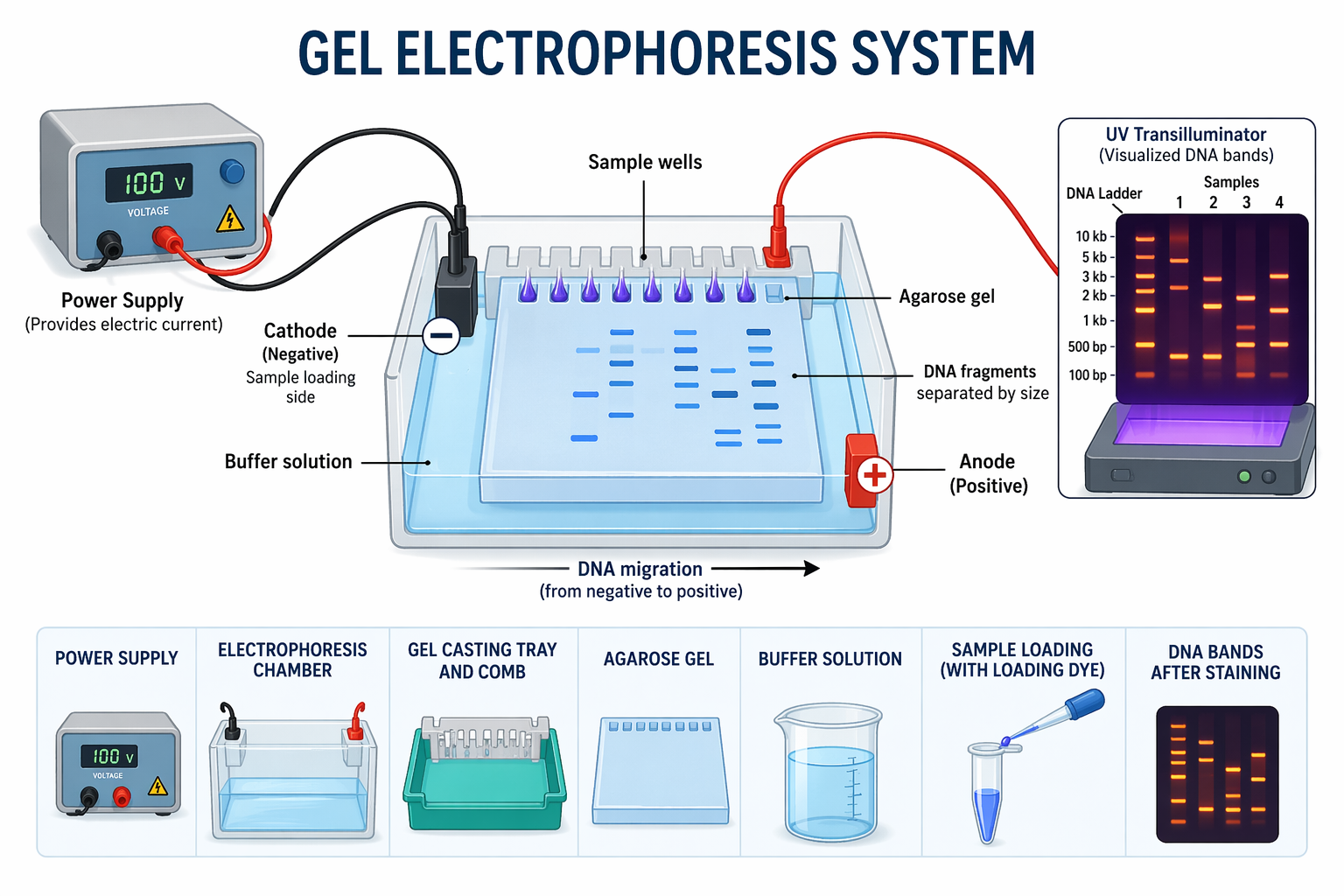
A complete gel electrophoresis system consists of several key components:
1. Power Supply
- Provides electric current
- Controls voltage and migration speed
- Connects to electrodes via cables
2. Electrophoresis Chamber
- Holds the gel and buffer
- Maintains the electric field
3. Electrodes (Anode & Cathode)
- Generate electric field
- Direct molecule movement
4. Gel Matrix (Support Medium)
Common materials:
- Agarose gel → DNA separation
- Polyacrylamide gel → protein analysis
5. Buffer Solution
- Maintains pH
- Conducts electricity
- Stabilizes molecules
6. Gel Casting Tray and Comb
- Forms the gel
- Creates wells for sample loading
7. Staining System
- Visualizes DNA or proteins
- Common dyes: Ethidium bromide, SYBR Green
These components work together to ensure accurate separation of biomolecules.
Types of Gel Electrophoresis
1. Agarose Gel Electrophoresis
- Used for DNA and RNA
- Suitable for large fragments (100 bp – 20 kb)
2. Polyacrylamide Gel Electrophoresis (PAGE)
- High resolution
- Used for proteins and small DNA fragments
3. SDS-PAGE
- Separates proteins by size
- Uses detergent (SDS) to denature proteins
4. Pulsed-Field Gel Electrophoresis (PFGE)
- Separates very large DNA molecules
- Used in genome analysis
5. 2D Gel Electrophoresis
- Separates proteins by:
- Charge (first dimension)
- Size (second dimension)
6. Immunoelectrophoresis
- Combines electrophoresis with antigen-antibody reaction
Each type is selected depending on the molecule and resolution required.
Procedure of Gel Electrophoresis
Step 1: Gel Preparation
- Dissolve agarose in buffer
- Heat and pour into tray
Step 2: Sample Preparation
- Mix DNA with loading dye
Step 3: Loading Samples
- Load into wells using micropipette
Step 4: Running the Gel
- Apply electric current
- Molecules migrate through gel
Step 5: Staining & Visualization
- Stain gel
- Observe bands under UV light
Applications of Gel Electrophoresis
Gel electrophoresis is widely used in:
- DNA fingerprinting (forensics)
- PCR analysis
- Genetic mutation detection
- Protein purification
- Disease diagnosis
- Vaccine development
It is essential in modern molecular biology research.
Advantages of Gel Electrophoresis
- Simple and cost-effective
- High resolution
- Reliable results
- Widely applicable
Limitations of Gel Electrophoresis
- Time-consuming
- Limited sensitivity for small molecules
- Requires skilled handling
- Low throughput compared to modern techniques
Precautions
- Wear gloves and goggles
- Avoid electric hazards
- Handle staining chemicals carefully
- Load samples gently to prevent damage
Examples of Gel Electrophoresis Systems
- DNA electrophoresis systems
- Mini gel systems for lab use
- High-throughput electrophoresis units
These systems are commonly used in research laboratories and diagnostic centers.
Conclusion
The gel electrophoresis system is a powerful and essential tool in biological sciences. By separating molecules based on size and charge, it enables researchers to analyze genetic material, diagnose diseases, and advance scientific discoveries.