Introduction to Viral RNA Extraction
A viral RNA extraction kit is an essential molecular biology tool used to isolate viral RNA from biological samples such as blood, saliva, plasma, nasopharyngeal swabs, and tissue. Efficient RNA extraction is the first critical step in viral detection, especially before downstream molecular techniques such as RT-PCR, sequencing, or viral load analysis.
With the rise of emerging infectious diseases and global viral outbreaks, reliable RNA extraction technologies have become crucial for diagnostics, epidemiology, and biomedical research.
Many molecular diagnostic workflows rely on viral RNA extraction kits for detecting RNA viruses including Influenza A virus, and Zika virus.
What is a Viral RNA Extraction Kit?
A viral RNA extraction kit is a reagent system designed to purify viral RNA molecules from biological samples by removing proteins, inhibitors, lipids, and host nucleic acids.
The purified RNA can then be used for:
-
Reverse transcription PCR (RT-PCR)
-
Quantitative PCR (qPCR)
-
Next-generation sequencing
-
Viral genome analysis
Most viral RNA extraction kits are optimized to produce high-purity RNA with minimal degradation, which is essential because RNA molecules are highly unstable.
Key Components of a Viral RNA Extraction Kit
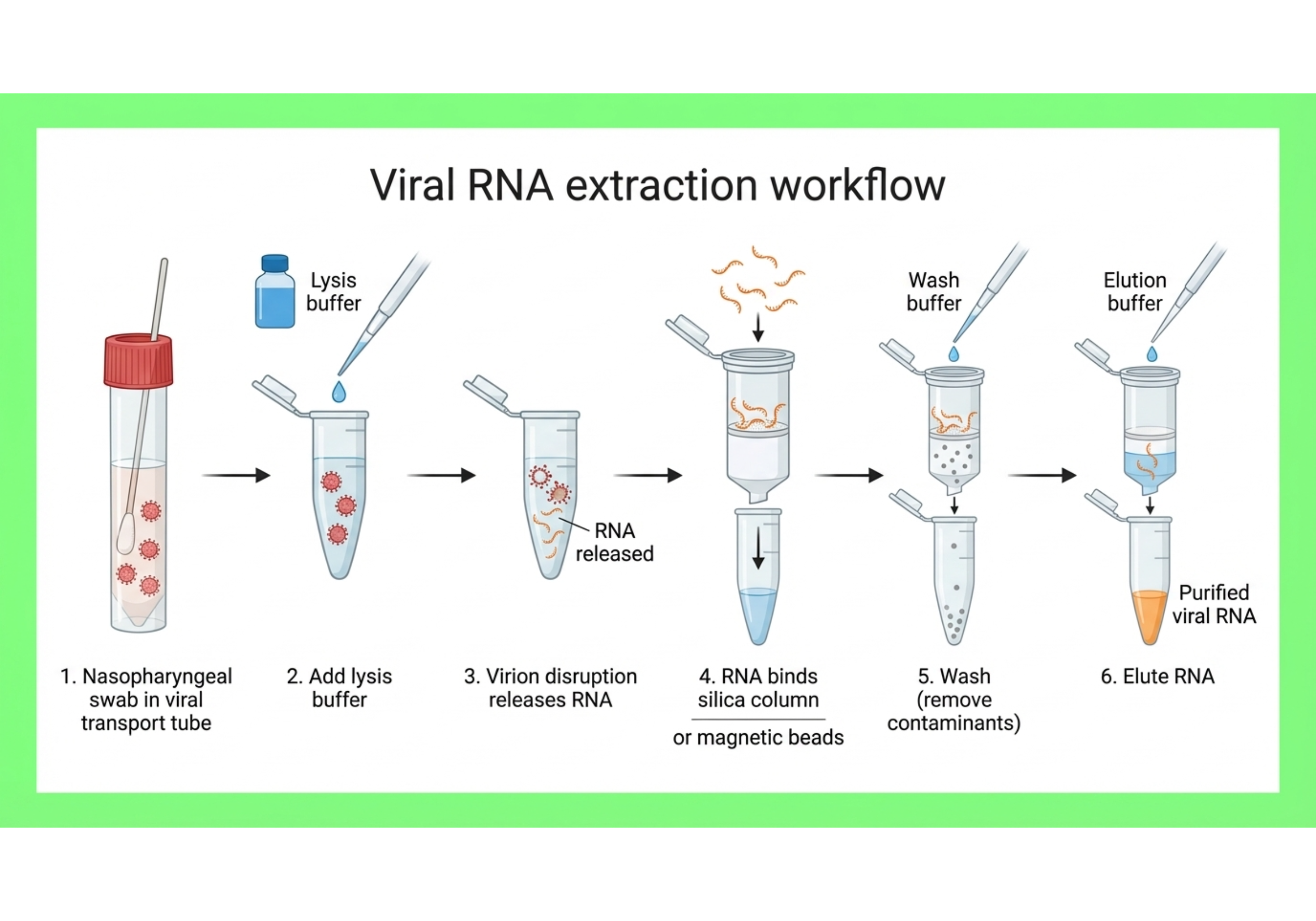
A typical viral RNA extraction kit includes several reagents that facilitate cell lysis, RNA binding, washing, and elution.
1. Lysis Buffer
The lysis buffer disrupts viral particles and releases RNA into solution. These buffers often contain chaotropic salts that inactivate RNases.
2. Carrier RNA
Carrier RNA improves RNA recovery, especially when viral RNA concentration is very low.
3. Binding Matrix
Most kits use silica membranes or magnetic beads that selectively bind RNA molecules.
4. Wash Buffers
Wash buffers remove contaminants such as proteins, salts, and PCR inhibitors.
5. Elution Buffer
The final purified RNA is released from the binding matrix using a low-salt buffer or nuclease-free water.
Viral RNA Extraction Workflow
The extraction workflow typically involves five main steps:
1. Sample Preparation
Clinical samples such as swabs, serum, or plasma are prepared and mixed with lysis buffer.
2. Viral Lysis
The viral envelope and capsid are disrupted, releasing RNA molecules.
3. RNA Binding
RNA binds to a silica membrane or magnetic beads under high-salt conditions.
4. Washing
Contaminants are removed using ethanol-based wash buffers.
5. RNA Elution
Purified RNA is eluted in a small volume suitable for downstream analysis.
Methods Used in Viral RNA Extraction Kits
Several technologies are used in modern viral RNA extraction kits.
Silica Column-Based Extraction
This is one of the most common methods for RNA purification. RNA molecules bind to a silica membrane in the presence of chaotropic salts.
Advantages:
-
High purity RNA
-
Reliable performance
-
Widely used in diagnostics
Magnetic Bead-Based Extraction
Magnetic bead technology enables automated high-throughput RNA purification.
Advantages:
-
Compatible with robotic systems
-
Ideal for large diagnostic laboratories
-
Fast processing
Phenol-Chloroform Extraction
Although less common in commercial kits, this classical method uses organic solvents to isolate RNA.
Advantages:
-
High RNA yield
-
Suitable for research applications
Applications of Viral RNA Extraction Kits
Viral RNA extraction kits play a key role in many scientific and medical fields.
Molecular Diagnostics
RNA extraction is essential for detecting viral pathogens using reverse transcription PCR.
Epidemiological Surveillance
Health laboratories use viral RNA extraction kits to monitor emerging viral outbreaks.
Vaccine Research
Scientists isolate viral RNA to study viral genomes and mutations.
Genomic Sequencing
Purified RNA can be analyzed using sequencing technologies such as Next-Generation Sequencing.
Importance of Viral RNA Extraction in COVID-19 Testing
During the COVID-19 pandemic, viral RNA extraction kits became fundamental tools in molecular diagnostics.
Laboratories worldwide relied on RNA extraction workflows to detect SARS-CoV-2 using RT-PCR assays. Efficient extraction ensured accurate detection even when viral loads were low.
Factors Affecting RNA Extraction Efficiency
Several factors influence the performance of a viral RNA extraction kit.
Sample Quality
Degraded or contaminated samples may reduce RNA yield.
RNase Contamination
RNases can rapidly degrade RNA molecules if not properly controlled.
Extraction Method
Different extraction technologies may vary in sensitivity and throughput.
Elution Volume
Smaller elution volumes produce higher RNA concentrations.
Comparison of Viral RNA Extraction Technologies
| Extraction Method | Yield | Automation | Common Use |
|---|---|---|---|
| Silica column | High | Limited | Clinical labs |
| Magnetic beads | High | Excellent | High-throughput testing |
| Organic extraction | Very high | Manual | Research labs |
Future Trends in Viral RNA Extraction
Modern viral RNA extraction kits are evolving to support faster diagnostics and automated workflows.
Emerging innovations include:
-
Automated extraction platforms
-
Microfluidic RNA purification systems
-
Integrated sample-to-answer diagnostics
Conclusion
A viral RNA extraction kit is a crucial component of modern molecular diagnostics and virology research. By enabling efficient purification of viral RNA from biological samples, these kits support a wide range of applications including RT-PCR diagnostics, viral genome sequencing, and epidemiological monitoring.
As new viral diseases continue to emerge, improvements in RNA extraction technologies will remain essential for rapid and accurate pathogen detection.