What Is Plasmid DNA Used For? A Comprehensive Scientific Overview
Introduction
The question “what is plasmid DNA used for?” lies at the core of modern molecular biology and biotechnology. Plasmid DNA has become an indispensable tool across research, clinical medicine, and industrial applications due to its unique structural and functional properties.
This article provides an in-depth scientific analysis of plasmid DNA applications, mechanisms, and technological relevance.
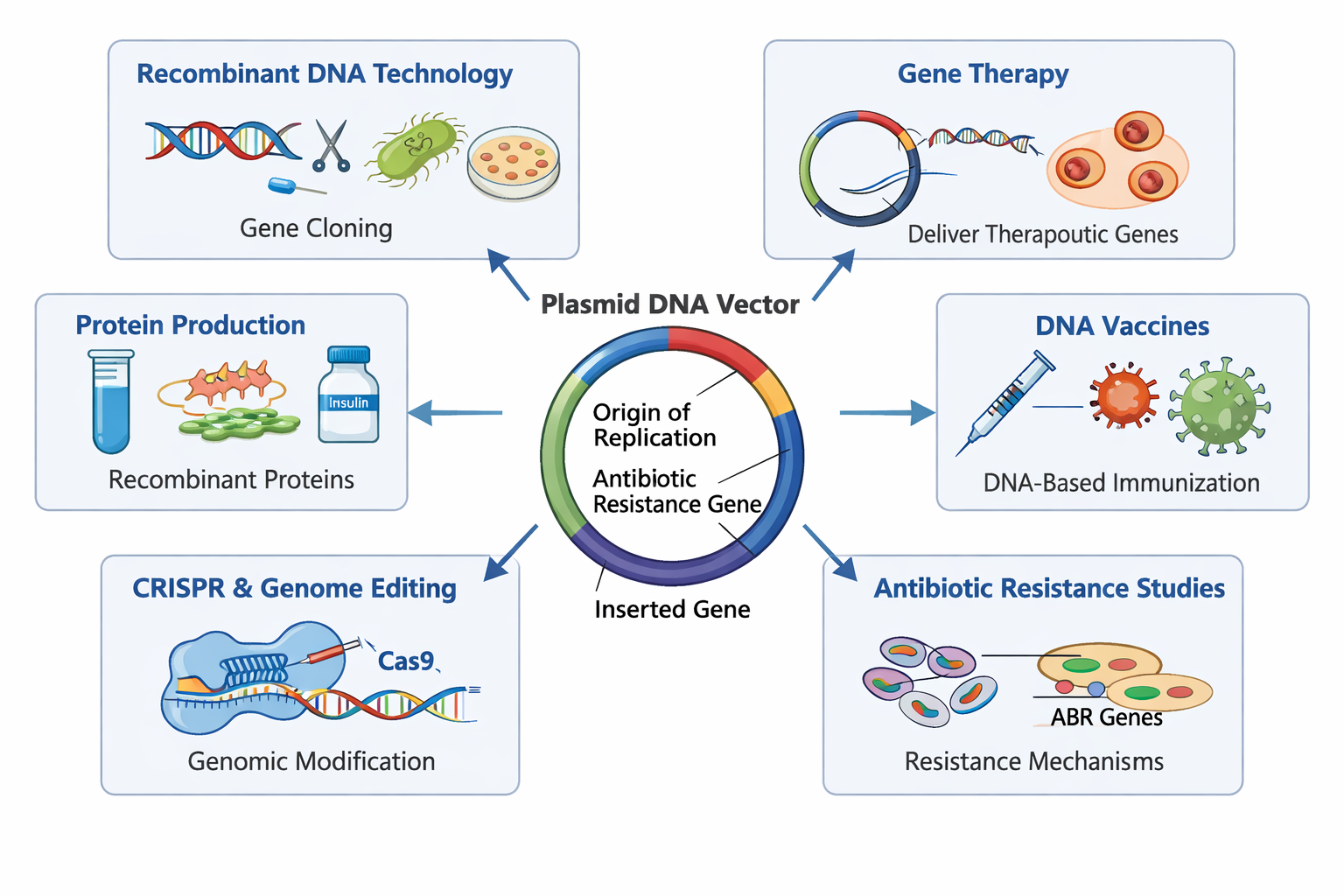
Structure and Biological Role of Plasmid DNA
Plasmid DNA consists of small, double-stranded, circular DNA molecules that exist independently of chromosomal DNA, primarily in bacteria but also in some eukaryotes.
Key structural elements include:
- Origin of replication (ori) – enables autonomous replication
- Selectable markers – often antibiotic resistance genes
- Multiple cloning site (MCS) – region containing restriction enzyme sites for DNA insertion
- Promoter regions – regulate gene expression
Plasmids are central to horizontal gene transfer, facilitating genetic exchange between microbial populations.
Major Applications: What Is Plasmid DNA Used For?
1. Recombinant DNA Technology
Plasmids function as cloning vectors in recombinant DNA technology, allowing insertion, amplification, and expression of foreign DNA.
Mechanism:
- DNA fragment insertion via restriction enzymes
- Ligation into plasmid backbone
- Transformation into host cells (e.g., Escherichia coli)
Applications:
- Gene cloning
- Functional genomics
- Synthetic biology
2. Protein Expression Systems
Plasmid DNA is extensively used to express recombinant proteins in prokaryotic and eukaryotic systems.
Examples of recombinant products:
- Human insulin
- Monoclonal antibodies
- Enzymes for industrial catalysis
Expression vectors are engineered with strong promoters (e.g., T7 promoter) to maximize transcription efficiency.
3. Gene Therapy and Genetic Medicine
In gene therapy, plasmids serve as non-viral vectors to deliver therapeutic genes into target cells.
This approach is being explored for:
- cancer
- cystic fibrosis
- Inherited metabolic disorders
Although less efficient than viral vectors, plasmids offer advantages in safety and reduced immunogenicity.
4. DNA Vaccine Development
Plasmid DNA is used to develop DNA vaccines, where genetic material encoding an antigen is introduced into host cells.
Mechanism:
- Cellular uptake of plasmid DNA
- In vivo antigen expression
- Activation of adaptive immune response
5. CRISPR and Genome Editing
Plasmids are essential delivery systems for CRISPR-Cas9 components.
They encode:
- Cas9 nuclease
- Guide RNA (gRNA)
This enables targeted genome modification with high precision.
6. Molecular Cloning and Functional Genomics
Plasmids enable amplification and analysis of specific DNA sequences.
Applications include:
- Gene function characterization
- Mutagenesis studies
- Reporter assays (e.g., GFP tagging)
7. Antibiotic Resistance and Microbial Evolution Studies
Naturally occurring plasmids often carry resistance genes, making them key tools for studying:
- Antimicrobial resistance mechanisms
- Bacterial adaptation and evolution
8. Industrial and Biotechnological Applications
Plasmid-based systems are used in large-scale bioprocessing for:
- Production of biofuels
- Enzyme engineering
- Biopharmaceutical manufacturing
They are integral to modern industrial biotechnology.
Types of Plasmids Used in Research
Different plasmids are engineered for specific purposes:
- Cloning plasmids
- Expression plasmids
- Shuttle vectors
- Integrative plasmids
Each type is optimized for host compatibility, replication control, and gene expression efficiency.
Advantages of Plasmid DNA in Biotechnology
- High stability and replication efficiency
- Ease of genetic manipulation
- Cost-effective production
- Scalability for industrial use
Limitations and Challenges
Despite their utility, plasmids present some limitations:
- Limited insert size
- Lower transfection efficiency (compared to viral vectors)
- Potential for gene silencing in eukaryotic systems
Conclusion
So, what is plasmid DNA used for? It is a foundational tool across molecular biology, enabling gene cloning, protein production, genome editing, and therapeutic innovation. Its versatility and adaptability make plasmid DNA central to both current and future advances in biotechnology and medicine.